Table Of Content
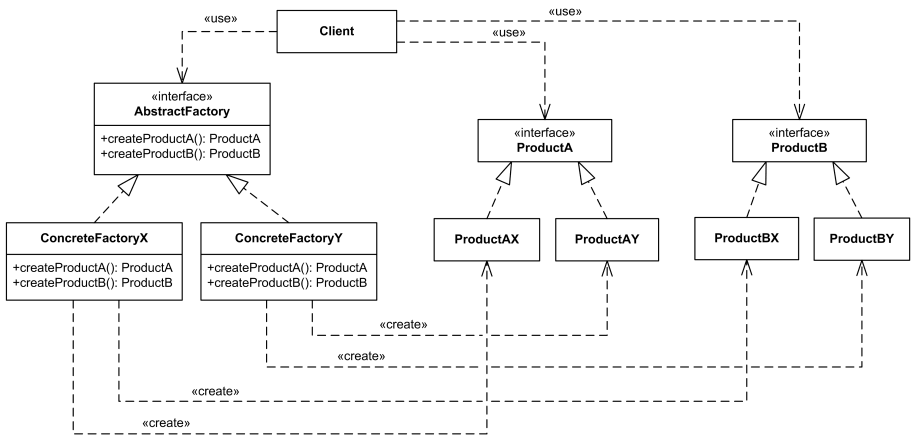
The Head First Design Patterns book includes yet another pattern they call Simple Factory. The main difference between Abstract Factory and Factory Method is that Abstract Factory is implemented by Composition; but Factory Method is implemented by Inheritance. Abstract Factory moves the level of abstraction up one level, so to speak, so the underlying implementations can be fairly easily swapped out with a different implementation. Most resources start with pristine datasets, start at importing and finish at validation.
Forecasting fashion trends; delivering superior quality
You can go to a carpenter, or you can go to a plastic door shop or a PVC shop. Based on the situation, you decide what kind of factory you need to approach. In this case, the BundleFactory is the Abstract Factory, BroadbandFactory, PhonelineFactory and MobileFactory are the Factory. To simplify more, these Factories will have Factory Method to initialise the individual products. Now, the company wants to offer their customer a bundle of their products i.e broadband, phone line, and mobile altogether, and here comes the Abstract Factory to play. If you don't care about tight coupling and dependencies, then you don't need an abstract factory.
Creational Design Patterns
The Abstract Factory is a creational design pattern that allows producing families of related or dependent objects without specifying their concrete classes. Abstract factory creates a base class with abstract methods defining methods for the objects that should be created. Each factory class which derives the base class can create their own implementation of each object type.
Abstract Factory Pattern vs Factory Method Pattern
Now that we have applied the abstract factory pattern to create the pizza topping factories, we will next update our pizza application to create pizzas using the pizza topping factories. It is easy to confuse the abstract factory pattern with the factory method pattern because both design patterns deal with object creation. Both the patterns advocates the Object Oriented Programming (OOP) principle “Program to an interface, not an implementation” to abstract how the objects are created.

Client utilizes the abstract factory to create families of objects without specifying their concrete types and interacts with objects through abstract interfaces provided by abstract products. Client enjoys the flexibility of seamlessly switching between families of objects by changing the concrete factory instance. Let us put it clear that most of the time in production code, we use abstract factory pattern because class A is programmed with interface B. Which type of data source shall be used shouldn't change the way client code retrieves it's data access classes. Your AbstractDataAccessFactory knows which type of data source is configured and provides a concrete Factory for the client code, i.e. These concrete factories can create the concrete implementations, e.g.
DZone Coding Java The Factory Pattern Using Lambda Expressions in Java 8 - DZone
DZone Coding Java The Factory Pattern Using Lambda Expressions in Java 8.
Posted: Wed, 01 Mar 2017 08:00:00 GMT [source]
Our experienced instructors provide step-by-step instructions, inspiration, and encouragement for everyone. We have a variety of workshops to fit all experience levels from beginner to seasoned sewing enthusiast. To master the Factory Design Pattern in Java, it's beneficial to collaborate with seasoned professionals.
We create an abstract factory class AbstractFactory as next step. Factory class ShapeFactory is defined, which extends AbstractFactory. Each method does return just one product, but the creator can use multiple factory methods, they just aren't necessarily related in any particular way. Abstract Factory is an interface for creating related products, but Factory Method is only one method. Abstract Factory can be implemented by multiple Factory Methods.
Fashion Camp
As an example, let's say a Showroom exclusively selling cellphones gets a query for the smart phones made by Samsung. Here we don't know the exact type of object to be created (assuming all the information for a phone is wrapped in the form of a concrete object). But we do know that we are looking for smart phones that are manufactured by Samsung. This information can actually be utilized if our design has Abstract factory implementation. Provide an interface for creating families of related or dependent objects without specifying their concrete classes.
The Abstract Factory provides you with an interface for creating objects from each class of the product family. As long as your code creates objects via this interface, you don’t have to worry about creating the wrong variant of a product which doesn’t match the products already created by your app. For each variant of a product family, we create a separate factory class based on the AbstractFactory interface. For example, the ModernFurnitureFactory can only create ModernChair, ModernSofa and ModernCoffeeTable objects. Abstract factory adds another level of abstraction to factory method. While factory method abstracts the way objects are created, abstract factory abstracts how the factories are created.
Now that we have implemented the pattern, let's weigh their pros and cons. The class names are written such that after the underscore I give the keyword related to it. You often experience this need when dealing with large, resource-intensive objects such as database connections, file systems, and network resources. The Factory Method separates product construction code from the code that actually uses the product. Therefore it’s easier to extend the product construction code independently from the rest of the code.
They are the actual instances of objects created by concrete factories. They implement the methods declared in the abstract products, ensuring consistency within a family and belong to a specific category or family of related objects. With this approach, the client code doesn’t depend on concrete classes of factories and UI elements as long as it works with these objects via their abstract interfaces. This also lets the client code support other factories or UI elements that you might add in the future. When the factory method comes into play, you don’t need to rewrite the logic of the Dialog class for each operating system. If we declare a factory method that produces buttons inside the base Dialog class, we can later create a subclass that returns Windows-styled buttons from the factory method.
Our trend forecasting team is constantly traveling the world to create the prints that sizzle and are always right on the money. Sew FYI promotes sewing by providing instruction, inspiration, and encouragement to designers of all experience levels. Visit our DTLA sewing studio and learn everything you need to sew with confidence.
Concrete classes extend abstract classes and provide the unimplemented functionality, while inheriting the common functionalities. AbstracFactory This is a very generic/abstract class which should not have much more than the createfunctions. Therefore, you need to have a regular method capable of creating new objects as well as reusing existing ones.


No comments:
Post a Comment